
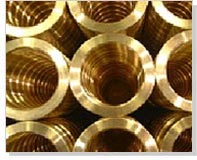
 Nonferrous alloys are referred to those alloys, which are derived from the non-ferrous metals. North American United Numbering system (UNS) is the accepted alloy designation for all the non-ferrous alloys across North America.
Non Ferrous alloys display a wide variety of mechanical properties and material characteristics.
Key Features of Nonferrous Alloy- Specified for use in electrical and electronic applications.
- Reduced weight
- Higher strength
- Nonmagnetic properties
- Higher melting points
- Resistance to chemical and atmospheric corrosion.
Buying Tips Considerations for Selecting the Right Nonferrous Alloy
- It is vital to know how easily the material can be shaped into a finished product and how its properties can be altered in the process.
- The end use of the product is to be kept in mind so as to ascertain whether metals can be simply cast into the finished part or first cast into an intermediate form, such as an ingot. Which then can be worked or wrought, by rolling, forging, extruding. The reaction of non ferrous metals to these forming processes can be severe. As a result, properties may differ considerably between the cast and wrought forms of the same metal or alloy.
Non Ferrous Metals Processing
For the melting of non-ferrous metals and alloys (aluminum, magnesium, copper, zinc, and lead) commercially numerous auxiliary processing steps are necessary other than melting and alloying.They are :
- Fluxing
- Metal refining
- Deoxidation
- Degassing
- Grain refining
- Pumping and filtration
Typically the prominent among the nonferrous alloys are the products formed from metals like
Non Ferrous Casting
Manufacturers often specialize in casting of non-ferrous metals as the furnace equipment alters substantially from ferrous metals. The different techniques used for non-ferrous casting, include
- die-casting, investment casting, centrifugal casting, vacuum casting, and high-pressure casting.
The most commonly used metals for non-ferrous casting, include - aluminum casting, brass casting, magnesium casting, bronze casting, zinc casting, titanium casting, and lead casting.