
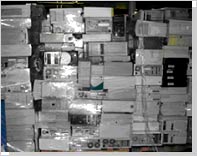
 Electronics scrap recycling is an evolving industry, which is at a critical point in its development, in terms of challenges and growth. With the continuously increasing production and use of electronic products, the challenges of disposal and recovery of these materials is gaining considerable importance. The commercial sector is into the recycling of electronic products for more than 20 years and has proved to be a major driving force in creating and growing the electronics industry. Up until recently, the prime sources of electronic products have been the manufacturers and bulk users. Although consumers also own large quantities of electronic products, most of them disposed of these products in landfills or left unused in storage. The number of personal computers or televisions becoming obsolete or replaced has been increasing considerably and is creating a need for recycling of consumer electronic products.
The disposal of end-of-life electronics products has become a point of concern the world across as municipalities face the potential of tremendous volumes to handle in the future. In addition to aggravating the availability and cost of landfills, electronics products contain substances, which should not be treated as common waste. Most, if not all, of these substances are recyclable and can be reused such as metals and plastics. Electronic products also include relative small quantities of some substances, which may be potentially hazardous, especially if they are not disposed properly, such as mercury, cadmium and lead. Companies involved in recycling of electronic products generally specialize in service that assures complete handling and disposal of these materials with the objective of optimizing recycling and reuse.
Types of Products RecycledElectronic products are equipment or apparatus in which the basic functions are facilitated by electronic circuits or components, including semiconductor devices (e.g., integrated circuits, transistors, diodes), electro-optical components (e.g., CRTs, LEDs, CCDs, lasers, etc.), passive components (e.g., resistors, capacitors, inductors), sensors (e.g., transducers, MEMs devices) and electronics packaging (e.g., printed circuit boards, connectors).
Market for Electronic ScrapAt present, the world electronic waste stands between 10 - 18 million tons annually. The prime reason for this vast amount of waste is fast advancing technology. Legislations requires that manufacturers of electronic products dispose their spent products safely. It requires a huge capital investment to components, which make up this electronic waste. Depending upon the input material, recycling can be done to recover precious metals, base metals, and mixed plastics.
The market, especially in end-of-life products, is huge and growing fast. However, it is also very heterogeneous and complex. The lifetime of electronic products range from 1-20 years. The material composition of the various categories of electronic products varies extremely. It also can alter rapidly within one category over time. In addition, new products will be on sale tomorrow, which we even cannot imagine today. Some materials of "high" intrinsic value make recycling economically viable in itself, however for most of the products, recycling is a mode of preventing harm to the surrounding / environment and at least recovering what is there to be had.
The key economic drivers of the electronics recycling industry are the need for an inevitable stream of great volume sources and the capital needed for automated techniques and processes. The future success and growth of the industry depends on formulating an efficient infrastructure for electronics recycling serving all sectors.
Recycling Facilities -Some of the important centers of electronic waste recycling include -
USIn USA, there are more than 500 companies, which are engaged in recycling of electronic products. This includes companies / organizations with operations in one or more segments of the electronics recycling industry. Most of the companies involved in recycling business are relatively small businesses and new entrants. However, there are some major recyclers, which collectively process a big chunk of industry volume. In addition to this, there are some manufacturers / OEMs and non profit organizations that have electronic recycling operations.
EuropeEurope has instituted a legislation that requires taking back and proper disposal of electronics and electrical equipment (i.e., the "WEEE Directives") and is developing the infrastructure to support it.
JapanMany electronic product manufacturers are implementing product take back and recycling operations in Japan. The country enacted the Home Appliance Recycling Law, and now washing machines, refrigerators, televisions, air-conditioners and PCs fall within the scope of this law.
ChinaWitnessing a tremendous growth in discarded electronic products, China has become a fast growing destination for recycling of electronic products and equipment.
China's National Development and Reform Commission (NDRC) has announced the selection of Zhejiang Province and the City of Qingdao as the first two locations in country to set up recycling systems for electronics scrap products. Installation and operation of recycling systems in these two centers will facilitate the practical references for the government in setting up corresponding industrial standards and regulations for recycling of electronic scraps at other locations.
Electronic Scrap Recycling - Associations- International Association of Electronics Recyclers
- Electronic Industries Alliance
- WEEE (Waste Electrical & Electronic Equipment) Forum
Electronic Industry Recycling - Publications
- E-Scrap News
- WEEE Scrap Bulletin
- Recycling International Magazine